Property managers and building owners across the San Francisco Bay Area often ask the same question: what exactly is checked during a fire sprinkler inspection, and how often should these inspections be conducted? The answer lies in NFPA 25, the national standard that governs inspection, testing, and maintenance of water-based fire protection systems. Understanding the difference between quarterly and annual requirements helps you stay compliant, avoid costly violations, and keep your building’s occupants safe.
Understanding Fire Sprinkler Inspection Frequencies Under NFPA 25
NFPA 25 establishes specific inspection schedules for various components of your sprinkler system. Not every part requires the same attention at the same intervals, which is why the standard breaks requirements into weekly, monthly, quarterly, annual, and multi-year categories. For most commercial and multi-unit residential properties, quarterly and annual inspections represent the core compliance milestones that demand professional attention.
California’s Title 19 regulations align closely with NFPA 25, requiring certified documentation after each fire sprinkler system inspection. Your local Authority Having Jurisdiction (AHJ) uses these reports to verify that your building meets code. Missing scheduled inspections or failing to address deficiencies can result in violation notices, reinspection fees, and potential liability.
Quarterly Fire Sprinkler Inspection Requirements
A quarterly fire sprinkler inspection focuses on readily accessible components and functional testing to confirm that your system remains in working order between more comprehensive annual checks. These inspections occur every three months and serve as routine health checks for your fire protection system. They catch developing issues before they become major problems.
Visual Assessments and Valve Verification
During quarterly visits, inspectors examine all control valves, alarm valves, and check valves to confirm they remain in the correct open or closed position. Valve supervisory switches get tested to verify they transmit signals to the fire alarm panel when tampered with. This step prevents a common failure scenario in which a valve is closed for maintenance and never reopened.
Inspectors also look for visible damage to accessible piping, fittings, and hangers. Signs of corrosion, leaks, or physical impact get documented and flagged for correction. While quarterly inspections do not include internal pipe examination, external visual checks reveal many issues that could compromise system performance.
Control Valve and Alarm Testing
Waterflow alarms require quarterly testing under NFPA 25. Inspectors open the inspector’s test connection to simulate water movement in the system and confirm that the alarm activates within the required timeframe. This test verifies that building occupants and monitoring services receive notification when the sprinkler system activates.
Vane-type and pressure-switch waterflow devices both get tested during this process. The inspector documents alarm response times and confirms signal transmission to the fire alarm control panel. Any delays or failures in alarm activation require immediate attention to maintain reliable fire protection coverage.
Documentation and Reporting
Every quarterly fire sprinkler inspection generates detailed documentation that becomes part of your compliance record. Reports include the inspection date, components tested, any deficiencies found, and corrective actions taken or recommended. California Title 19 requires that these records remain available for AHJ review.
Maintaining organized inspection records demonstrates due diligence to fire marshals, insurance underwriters, and potential litigation. Many property managers find that consistent quarterly documentation simplifies annual inspections and helps track system performance trends.
Annual Fire Sprinkler System Inspection Requirements
The annual fire sprinkler inspection expands significantly beyond quarterly checks, covering components that only require yearly examination under NFPA 25. This comprehensive evaluation assesses every major element of your system to confirm it will perform correctly during a fire event. Think of it as the full physical exam compared to quarterly checkups.
Comprehensive Component Testing
Annual inspections include everything covered in quarterly inspections, plus additional tests and examinations. Main drain tests verify that water supply pressure and flow meet design specifications. Inspectors measure both static pressure (system at rest) and residual pressure (water flowing) to identify supply degradation.
Fire department connections (FDCs) are inspected annually for accessibility, cap condition, and check valve operation. Gauges throughout the system are compared against calibrated test gauges to verify accuracy. The table below summarizes key components addressed during annual fire sprinkler inspection visits:
| Component | Quarterly | Annual |
| Control valve position | ✓ | ✓ |
| Waterflow alarm test | ✓ | ✓ |
| Main drain test | ✓ | |
| Sprinkler head inspection | ✓ | |
| FDC examination | ✓ | |
| Gauge accuracy verification | ✓ | |
| Hanger and seismic bracing | ✓ | |
| Spare sprinkler cabinet | ✓ |
Sprinkler Head Examination and Obstruction Checks
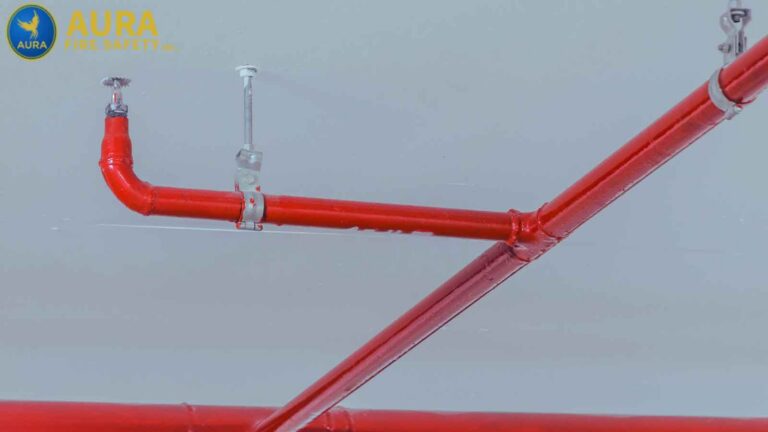
Sprinkler heads themselves are examined during annual fire sprinkler system inspection visits. Inspectors look for corrosion, paint overspray, physical damage, loading (dust and debris accumulation), and proper orientation. Heads that show signs of damage or exceed their service life must be replaced to maintain system reliability.
Annual inspections also address potential obstructions near sprinkler heads. Storage stacked too close to ceiling-mounted sprinklers can prevent adequate water distribution during activation. Inspectors verify that required clearances exist between sprinklers and any stored materials, partitions, or structural elements that could interfere with spray patterns.
ALSO READ: Emergency Fire Protection Services: How Aura Fire Safety Keeps You Safe
Key Differences Between Quarterly and Annual Inspections
Understanding what separates these inspection types helps property managers budget appropriately and prepare their buildings for each visit. Quarterly inspections verify operational status by functional testing alarms and visually confirming valve positions. Annual inspections go deeper, examining individual components and testing system performance metrics.
The following comparison highlights the primary distinctions:
Quarterly Inspection Focus:
- Valve position verification
- Waterflow alarm testing
- Visual inspection of accessible components
- Supervisory switch testing
- Basic documentation review
Annual Inspection Focus:
- All quarterly items plus:
- Main drain flow testing
- Individual sprinkler head examination
- FDC accessibility and condition
- Gauge calibration verification
- Hanger and bracing inspection
- Spare sprinkler inventory check
- Comprehensive deficiency documentation
Both inspection types generate reports required for Title 19 compliance. Annual reports typically contain more detail and may include photographs of specific conditions or deficiencies identified during examination.
ALSO READ: Common Fire Sprinkler Correction Issues and Solutions
California Title 19 Compliance and What It Means for Your Property

Title 19 of the California Code of Regulations mandates specific fire sprinkler inspection requirements for commercial buildings and multi-unit residential properties throughout the state. These regulations, along with NFPA 25, establish minimum compliance standards that every property owner must meet. The San Francisco Fire Department and other Bay Area AHJs enforce these requirements through periodic inspections and documentation reviews.
AHJ Coordination and Documentation
Your local fire marshal may request inspection records at any time, particularly during routine building inspections or permit applications. Having organized documentation showing completed quarterly and annual fire sprinkler system inspection visits demonstrates proactive compliance. Missing or incomplete records raise red flags that often lead to more detailed scrutiny.
Working with an experienced fire sprinkler inspection company that understands local AHJ requirements streamlines compliance. Different jurisdictions may have specific documentation formats or additional requirements beyond baseline NFPA 25 standards. Inspectors familiar with San Francisco, Oakland, San Jose, and other Bay Area fire departments navigate these variations efficiently.
Avoiding Violations and Re-Inspection Fees
Deficiencies identified during inspections must be corrected promptly to maintain compliance. Ignoring documented issues puts your property at risk for violation notices that carry fines and mandatory re-inspection fees. More significantly, uncorrected deficiencies compromise your system’s ability to protect occupants and property during an actual fire.
Partnering with a fire protection company that handles both inspections and sprinkler repairs streamlines the correction process. When the same team that identifies issues can also resolve them, deficiencies get addressed faster and with less coordination overhead.
Partnering With an Experienced Fire Protection Company
Selecting the right partner for your fire sprinkler inspection needs affects both compliance outcomes and long-term maintenance costs. Look for companies with documented experience in your specific building type, familiarity with your local AHJ, and the capability to address corrections quickly when issues arise. Transparent pricing and clear communication about findings matter as much as technical expertise.
Aura Fire Safety has served San Francisco Bay Area property owners for over 27 years, providing quarterly and annual fire sprinkler inspections for commercial buildings, multi-unit residential properties, hotels, and restaurants. Our technicians understand Title 19 requirements and work directly with local fire marshals throughout the region. We deliver detailed reports that satisfy AHJ documentation standards and keep your building compliant year-round.
Ready to schedule your next fire sprinkler system inspection? Contact Aura Fire Safety to discuss your property’s needs and establish a consistent inspection schedule that protects your occupants and your investment.