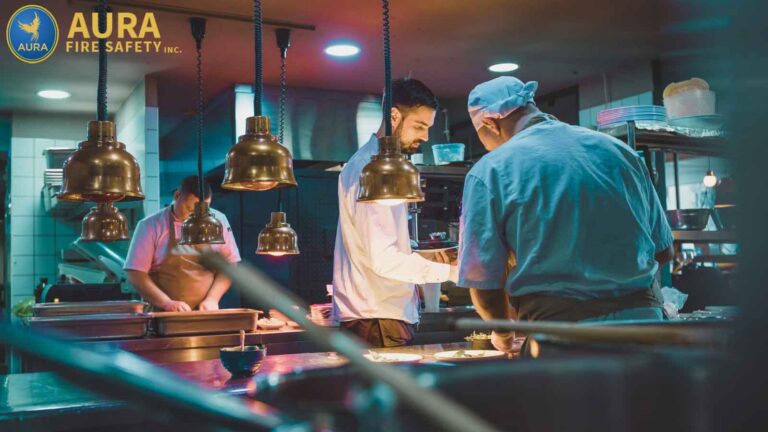
A kitchen hood fire suppression system is a wet chemical suppression system designed specifically for commercial cooking operations. When a fire breaks out on a cooking surface, fusible links above the equipment melt at a preset temperature, triggering the system to shut off the fuel or electric supply and discharge a potassium-based wet chemical agent through nozzles aimed directly at the cooking area. The agent reacts with burning grease to form a thick, soapy foam layer that smothers the fire and cools the surface to prevent re-ignition. This process, called saponification, is what makes wet chemical systems effective against grease fires that water-based sprinkler systems cannot safely suppress. Every commercial kitchen with cooking equipment that produces grease-laden vapors is required to have one of these systems installed, and California mandates semi-annual professional inspections to keep them operational.
What Is a Kitchen Hood Fire Suppression System?
A kitchen hood fire suppression system is a pre-engineered fire protection system installed above commercial cooking equipment, inside the exhaust hood, and along the ductwork. It is designed to detect and suppress grease fires at the source before they can spread to the exhaust system or the rest of the building.
These systems are separate from and independent of the building’s fire sprinkler system. A sprinkler system uses water and protects the dining room, storage, hallways, and other non-cooking areas. A kitchen hood suppression system uses a wet chemical agent and protects only the cooking line, hood, and duct. Both systems are required in a restaurant, but they operate independently and are inspected on different schedules under different NFPA standards.
The wet chemical agent used in modern systems is potassium-based. When discharged onto burning cooking oil, it reacts chemically with the grease through a process called saponification, converting the burning oil into a non-combustible soapy foam. This foam blanket seals the surface, cuts off oxygen, and cools the area to prevent re-ignition. Older dry chemical systems used before 1994 were less effective against modern high-efficiency cooking oils, which burn at higher temperatures than the animal fats and lard used in earlier decades.
Any facility with commercial cooking equipment that produces grease-laden vapors, including restaurants, hotel kitchens, school cafeterias, hospital kitchens, grocery store delis, and office cafeterias, is required to have a kitchen hood fire suppression system installed. The governing standards are NFPA 17A (Standard for Wet Chemical Extinguishing Systems), NFPA 96 (Standard for Ventilation Control and Fire Protection of Commercial Cooking Operations), and the UL 300 testing standard.
How Does the System Detect and Suppress a Fire?
A fusible link melts when heat from a cooking-surface fire reaches its rated temperature, triggering an automatic sequence that shuts off fuel, discharges wet chemical agent through nozzles aimed at each appliance, and activates the building fire alarm in seconds. The system suppresses the fire faster than a person can react with a portable extinguisher, which is why it serves as the primary line of defense for cooking-line fires.
The sequence breaks down into five stages:
- Detection. Fusible links sit above each piece of cooking equipment in the path of rising heat. Each link is a mechanical device with a solder joint rated to melt at a specific temperature, commonly between 360°F and 450°F for commercial kitchen applications depending on the equipment type and placement. Heat reaching that threshold separates the link and triggers the release mechanism.
- Fuel shutoff. Gas or electric supply to all cooking equipment under the hood cuts off immediately. This removes the heat source feeding the fire and prevents escalation.
- Agent discharge. Wet chemical agent stored in a pressurized cylinder releases through piping and discharges from nozzles positioned directly above each piece of cooking equipment. Nozzle placement is specific to the kitchen layout, with each nozzle aimed at the surface it protects. The agent coats the burning surface, reacts with the grease to form a saponification foam layer, and smothers the fire.
- Fire alarm activation. The suppression system simultaneously triggers the building fire alarm. Occupants receive immediate notification, and buildings with monitored fire alarm service alert the fire department.
- Manual activation. A manual pull station mounted near the kitchen exit allows staff to activate the system before the fusible links melt. Pulling the station runs the same full sequence: fuel shutoff, agent discharge, and alarm activation.
What Are the Key Components of a Kitchen Hood Suppression System?
A kitchen hood suppression system consists of seven core components: a wet chemical agent cylinder, discharge nozzles, a detection line with fusible links, a manual pull station, an automatic fuel shutoff, a control head and release mechanism, and connecting piping. Each part has a specific role in the detection-to-suppression sequence, and all must function together for the system to operate correctly during a fire.
- Wet chemical agent cylinder. A pressurized stainless steel cylinder holds the potassium-based wet chemical agent. The cylinder mounts on a wall away from the cooking area and connects to the nozzles through a piping network.
- Discharge nozzles. Metal nozzles sit above each piece of cooking equipment, with placement and angle engineered to match the specific kitchen layout so the agent covers the cooking surface completely. Moving or replacing cooking equipment requires nozzle positions to be re-evaluated.
- Detection line with fusible links. A cable runs above the cooking area with fusible links spaced at intervals corresponding to each piece of equipment. The links melt at their rated temperature and mechanically trigger the release.
- Manual pull station. A red pull handle mounts in a visible, accessible location near the kitchen exit. Pulling it bypasses fusible link detection and activates the system immediately.
- Automatic gas or electric shutoff. A connection between the suppression system and the fuel supply closes a shutoff valve on the gas line or cuts the electrical circuit to cooking equipment when the system activates.
- Control head and release mechanism. This mechanical assembly connects the detection line to the agent cylinder. A melted fusible link or activated manual pull causes the control head to open the cylinder valve and pressurize the piping.
- Piping. Metal tubing routes the agent from the cylinder to each discharge nozzle. Proper sizing and routing deliver the agent at the correct pressure and flow rate to every nozzle simultaneously.
What Is the UL 300 Standard and Why Does It Matter?
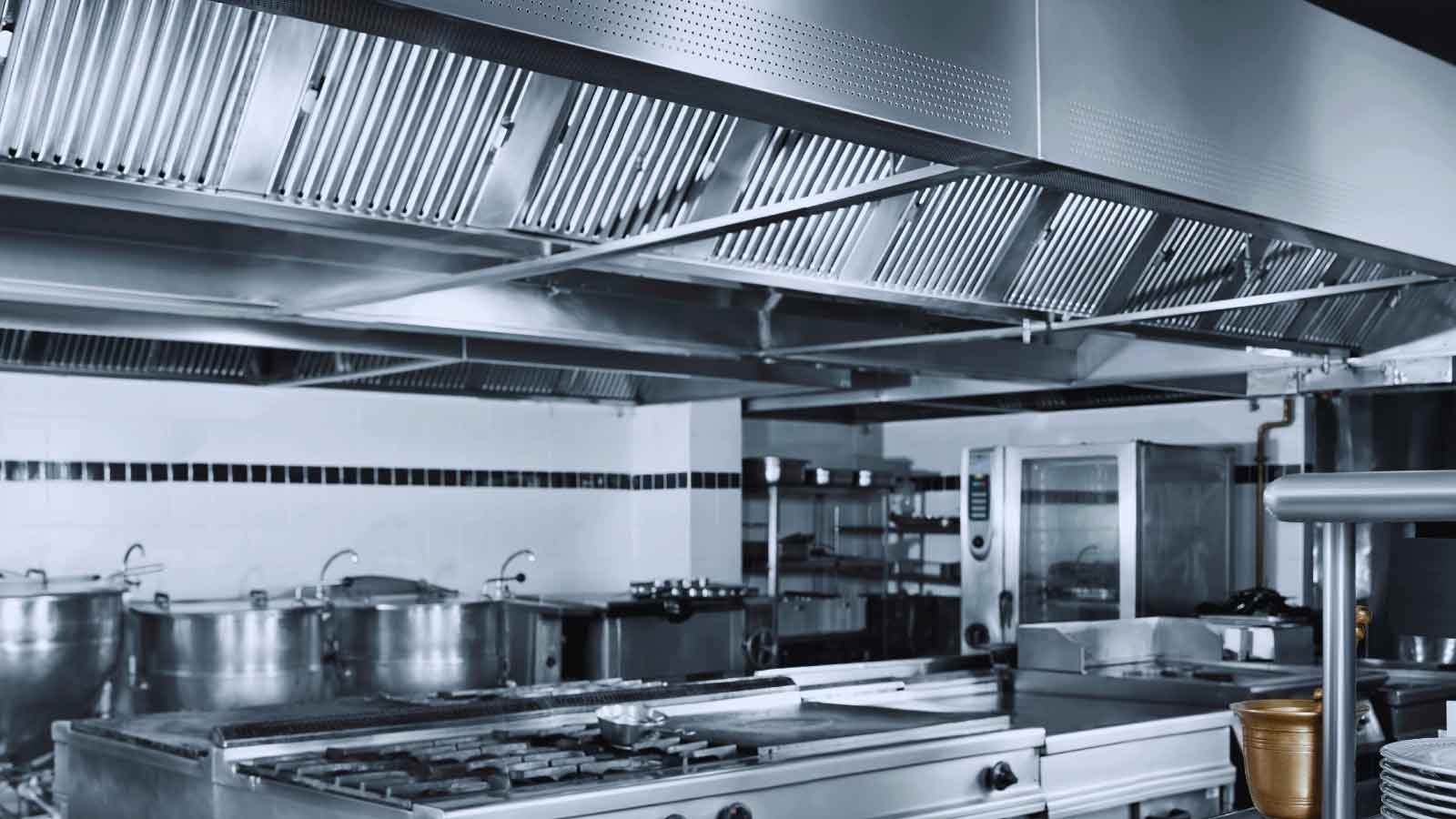
UL 300 is the fire testing standard for kitchen fire suppression systems, adopted in 1994 by Underwriters Laboratories. It was created to address a shift in commercial cooking: restaurants began using vegetable-based cooking oils and high-efficiency fryers that operate at higher temperatures than the animal fats and lard used in previous decades. The older dry chemical suppression systems tested under pre-1994 standards could not reliably suppress fires involving these hotter, harder-to-extinguish oils.
UL 300 testing requires suppression systems to demonstrate effective fire control on modern cooking media under realistic conditions. Systems that pass UL 300 testing use wet chemical agents specifically formulated for grease fire suppression through saponification.
For restaurant owners, the practical impact is straightforward: any kitchen hood fire suppression system manufactured after 1994 must be UL 300 compliant. Systems installed before 1994 that still use dry chemical agents may not meet current standards. Fire marshals and health departments frequently flag pre-UL 300 systems during inspections, and buildings with older systems may be required to upgrade. Aura Fire Safety services only UL 300 compliant systems and can upgrade older systems to meet the current standard.
What Maintenance and Inspections Are Required?
Kitchen hood fire suppression systems require both owner-level visual checks and professional inspections to stay operational and compliant.
- Monthly visual checks (performed by kitchen staff). Kitchen managers or designated staff should verify that discharge nozzles are not clogged with grease, that tamper seals on the cylinder and pull station are intact, and that the manual pull station is accessible and unobstructed. These checks take a few minutes and catch obvious issues between professional service visits.
- Semi-annual professional inspection (required in California). Every 6 months, a licensed fire protection contractor must perform a comprehensive kitchen hood fire suppression inspection. The inspection covers nozzle positioning relative to current cooking equipment layout, wet chemical agent cylinder weight and pressure, fusible link condition and temperature rating, automatic gas or electric shutoff function, manual pull station operation, piping connections and integrity, and fire alarm system interconnection. After a successful inspection, the system receives a dated certification tag. Aura Fire Safety tracks due dates for clients and proactively schedules each semi-annual service so restaurant owners never miss a deadline.
- After any discharge or activation. If the system activates, whether from an actual fire or an accidental trigger, it must be fully recharged and inspected before the kitchen can resume cooking operations. This includes replacing the wet chemical agent, installing new fusible links, resetting the control head, and verifying nozzle positioning. To understand how long an Ansul fire system service takes, most recharge and inspection visits are completed in a few hours depending on system size.
Not sure if your kitchen hood fire suppression system is current on inspections or UL 300 compliant? Aura Fire Safety handles semi-annual inspections, UL 300 upgrades, and full system service for commercial kitchens across the Bay Area. Contact our team to schedule your next inspection.
Frequently Asked Questions
How often does a kitchen hood fire suppression system need to be inspected?
California requires semi-annual professional inspections, meaning every 6 months. Kitchen staff should perform monthly visual checks between professional visits to catch obvious issues like grease-clogged nozzles or broken tamper seals. The system must be inspected and recharged after any activation, regardless of the semi-annual schedule.
Can the system activate accidentally?
Accidental activations are uncommon but possible. The most frequent cause is a fusible link that separates due to sustained high heat near the cooking surface during normal operations, particularly if equipment is positioned too close to the detection line. Proper nozzle and fusible link placement during installation and inspection minimizes this risk.
What should kitchen staff do after the system activates?
Evacuate the kitchen, call 911 if the fire alarm has not already triggered notification, and contact your fire protection contractor. Do not attempt to reset or clean the system. The system requires professional recharging with a new wet chemical agent, new fusible links, and a full inspection before any cooking equipment turns back on, and cooking cannot resume until the system is recertified.
Does a kitchen hood suppression system replace fire sprinklers?
No. These are two independent systems that protect different areas of the building. The kitchen hood suppression system protects the cooking line using a wet chemical agent. The building’s fire sprinkler system protects dining rooms, hallways, storage, and all other spaces using water. Both systems are required in a restaurant, and both have separate inspection schedules and governing standards.
How long does a semi-annual kitchen hood inspection take?
Most semi-annual inspections are completed in one to two hours depending on the number of cooking appliances and nozzles in the system. Larger kitchens with multiple hoods and extensive nozzle configurations may take longer. Schedule the inspection during off-peak hours when the kitchen can be briefly taken offline for testing.
What is saponification and why does it matter for kitchen fires?
Saponification is the chemical reaction that occurs when the potassium-based wet chemical agent contacts burning cooking oil. The reaction converts the oil into a non-combustible soapy foam that blankets the cooking surface, cuts off oxygen, and cools the area to prevent re-ignition. This is why wet chemical systems are effective against grease fires. Water-based sprinklers cannot produce this reaction and can actually cause burning oil to splash and spread.