
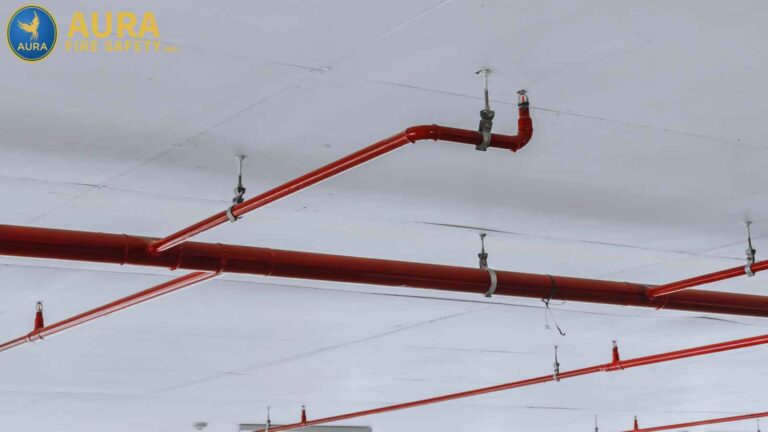
A fire sprinkler system will work in an emergency when it has been properly inspected and maintained on schedule. That means all control valves are confirmed open, sprinkler heads are unobstructed and undamaged, water supply pressure is adequate, and the system has a current inspection record with no unresolved deficiencies. For property managers, building owners, and HOA boards overseeing commercial and multi-unit residential properties in the San Francisco Bay Area, the answer to that question depends entirely on what has been done to the system between fire events.
Get in Touch for Fire Protection Services
How Does a Fire Sprinkler System Activate?
A fire sprinkler activates when the heat-sensitive element in a specific head reaches its rated temperature threshold, typically 155°F to 165°F for standard heads. Each head activates independently based on the heat level directly above it. When the glass bulb or fusible link breaks or melts, pressurized water flows through that head only. Every other head in the building remains inactive.
Smoke does not trigger fire sprinklers. Only sustained heat at the activation threshold causes a head to discharge. This distinction matters for reliability: a system that is mechanically sound but has an obstructed, corroded, or painted head at the location of a fire may fail to suppress it even if every other head in the building is in perfect condition.
What Can Prevent a Fire Sprinkler System From Working When Needed?
Five conditions can prevent a fire sprinkler system from performing correctly. Any one of them can compromise the entire system or a specific section of it.
- Closed or partially closed control valve
A control valve closed during a repair or maintenance visit and not reopened can leave an entire floor or wing unprotected. The building continues to operate normally with no visible indication that a section has lost fire protection unless tamper switches are functional and connected to a monitored fire alarm system. Control valves are required to be supervised and in the fully open position at all times. - Obstructed sprinkler heads
Storage placed within 18 inches of standard sprinkler heads or within 36 inches of ESFR heads blocks the water spray pattern when the head activates. The head may discharge correctly but the water cannot reach the fire below. Storage violations are common in apartment building storage areas, commercial warehouses, and mechanical rooms. - Corroded, painted, or physically damaged heads
Paint on the heat-sensitive element prevents the head from activating at its rated temperature. Corrosion at the valve seat can cause leaks and interfere with proper activation. Physical damage from construction activity or equipment impact can crack the head frame and compromise the seal. None of these conditions are self-correcting. They all require head replacement. - Internal pipe obstruction
Tuberculation (rust deposits), microbiologically influenced corrosion (MIC), or debris accumulation inside steel piping restricts or blocks water flow when a head activates. Internal obstruction is not visible externally. It is only detected during the 5-year obstruction investigation when piping is opened at the riser and end-of-line branch. - Insufficient water pressure
In buildings where a fire pump is installed, pump failure can prevent the system from delivering adequate pressure to activated heads. Supply valve issues, municipal pressure drops, or an undersized water supply connection can produce the same result in any building. Adequate pressure is confirmed during the main drain test at each annual inspection and the full-flow test at the fire pump 5-year evaluation.
What Do Fire Sprinkler Inspections Actually Check?
California Title 19 and NFPA 25 require three inspection tiers that collectively verify every aspect of system readiness. Each tier catches a different category of problem.
| Inspection Type | Frequency | What It Verifies |
| Quarterly | Every 3 months | Control valve positions, sprinkler head condition (corrosion, paint, damage, obstruction), piping, and signage. Visual only — no water flowed. |
| Annual | Every 12 months | Everything in quarterly, plus main drain test, alarm valve trip, flow switch and tamper switch testing, pressure gauge verification, and water flow alarm test. |
| 5-Year Certification | Every 5 years | Internal pipe inspection (obstruction investigation), full-flow test, concealed space evaluation, check valve inspection, gauge calibration, FDC back flush. Title 19 certification issued upon passing. |
Quarterly inspections catch the visible problems. Annual inspections confirm functional operation. The 5-year certification reveals what neither quarterly nor annual testing can see. For a detailed breakdown of what the 5-year inspection involves, see our post on 5-year fire sprinkler inspections.
All three inspection tiers must be documented and available to the AHJ on request. Learn more about fire sprinkler inspections.
What Are the Most Common Reasons Fire Sprinkler Systems Fail to Perform?
The two most common real-world causes of fire sprinkler system failure are a closed control valve and a system that has never been formally tested.
Closed control valve: A valve closed during a repair or inspection and not reopened leaves an entire section unprotected. The building operates normally with no visible warning unless tamper switches are functional and monitored.
Untested system: A system that has never been inspected under NFPA 25 may look intact externally while having internal corrosion, pressure deficiencies, or component failures a visual check would never catch.
Other causes include:
- Recalled sprinkler heads: Subject to manufacturer recalls affecting activation reliability. Must be replaced regardless of age or apparent condition.
- Heads past end of service life: Fast-response heads require testing or replacement at 25 years. Standard heads at 50 years under NFPA 25.
When deficiencies are found, NFPA 25 classifies them as impairments, deficiencies, or observations. Impairments require immediate action, AHJ notification within 8 hours under NFPA 72, and a fire watch within 4 hours under NFPA 101. Aura Fire Safety handles fire sprinkler repairs and corrections under the same inspection contract.
What Can Property Managers Do Between Inspections?
Five actions between scheduled inspections reduce the risk of system failure at a level that building staff can manage without technical expertise.
Get in Touch for Fire Protection Services
- Confirm control valves are fully open during every building walkthrough. A valve that looks open but is partially closed reduces flow to the section it serves.
- Maintain required clearances below sprinkler heads. Standard heads require 18 inches of clearance. ESFR heads require 36 inches. Check storage areas, mechanical rooms, and any space where materials are moved or stacked regularly.
- Protect sprinkler heads before any painting. Never allow renovation or touch-up painting near sprinkler heads without covering them first. Paint on the heat-sensitive element requires full head replacement.
- Report visible signs of damage or leaks promptly. A dripping head, visible rust, or a bent head frame should be reported to a licensed fire protection contractor immediately, not held until the next scheduled inspection. See our page on fire sprinkler repairs for what to look for.
- Keep inspection records accessible. The AHJ may request documentation at any time. Records covering all three inspection tiers should be on file and available without delay.
Building staff visual checks do not substitute for professional inspections under NFPA 25. They supplement the inspection program by catching obvious problems between scheduled visits.
How Do I Confirm My System Is Currently Compliant?
Confirm compliance by locating the most recent inspection reports for all three tiers and verifying that the last inspection for each was completed on time and that any deficiencies listed have been corrected and documented.
Specifically check:
- The last quarterly inspection was completed within the past 3 months
- The last annual inspection was completed within the past 12 months
- The last 5-year Title 19 certification was issued within the past 5 years
- No open impairments or deficiencies remain uncorrected on any inspection report
An open deficiency on the most recent report that has no documented correction represents an active compliance gap. The AHJ may cite this independently of when the next inspection is scheduled.
For newly acquired properties, request the full inspection history before assuming compliance. Prior owners may not have maintained the schedule, and a lapsed certification transfers with the property. Scheduling a fire sprinkler inspection after acquiring a property establishes a current baseline regardless of what documentation exists.
Schedule Your Fire Sprinkler Inspection in the Bay Area
Aura Fire Safety serves commercial and multi-unit residential properties throughout the San Francisco Bay Area. Our licensed team handles quarterly, annual, and 5-year Title 19 certifications, provides written reports after every visit, and manages corrections under the same contract. With 27 years of experience, C-16 license #1116233, and State Fire Marshal registration E 2336, we are familiar with SFFD requirements and local AHJ expectations throughout the region. Contact Aura Fire Safety online to schedule your inspection or confirm your building’s compliance status.
Frequently Asked Questions
Will a fire sprinkler activate if there is smoke but no fire?
No. Fire sprinklers are activated by heat, not smoke. The heat-sensitive element in each head must reach its rated temperature threshold, typically 155°F to 165°F for standard heads, to activate. Smoke, steam, and cooking vapors will not trigger a properly functioning sprinkler system.
How long does a fire sprinkler system last?
The piping and structural components of a fire sprinkler system can last decades with proper maintenance. Individual components have defined service life limits under NFPA 25. Fast-response heads must be tested or replaced at 25 years. Standard heads must be tested or replaced at 50 years. Pressure gauges are calibrated during the 5-year inspection, and any gauge not accurate to within 3 percent of full scale is recalibrated or replaced at that time.
What is the most important thing a property manager can do to ensure a fire sprinkler system works?
Keep all control valves in the fully open position at all times and stay current on the inspection schedule. A single closed control valve can leave an entire section of the building unprotected without triggering any visible warning unless tamper switches are functional and monitored.
If my system has never been inspected, is it likely to work in an emergency?
An uninspected system may work, but there is no way to confirm it without formal testing. Systems that have never been inspected under NFPA 25 may have closed valves, internal corrosion, pressure deficiencies, or component failures that a visual check would not reveal. Scheduling a formal inspection establishes a baseline compliance record and identifies any issues before they become a problem.
Get in Touch for Fire Protection Services